In the fast‑paced world of esports, a marginal advantage can mean the difference between victory and defeat. Knowing how to upgrade your gaming PC for competitive advantage is essential for players who demand the highest frame rates, the lowest latency, and reliable performance during intense matches. Modern titles such as Counter‑Strike: Global Offensive or Valorant push both CPU and GPU to their limits, and a well‑planned hardware upgrade can shave precious milliseconds off your reaction time. This guide walks you through the most impactful upgrades, explains why each component matters, and provides a step‑by‑step plan so you can confidently upgrade your gaming PC and dominate the competition.
Why Upgrade Gaming PC Matters
Competitive gamers thrive on consistency. Even a stable 60 fps experience can be insufficient when opponents are hitting 144 fps or higher, because higher frame rates reduce input lag and make motion appear smoother. Upgrading your gaming PC directly influences three core performance metrics: frames per second (FPS) boost, system latency, and stability under sustained load. These metrics translate into faster reaction times, clearer visuals, and fewer crashes that could cost you a tournament spot. Moreover, many esports titles now support high refresh‑rate monitors (240 Hz and beyond), making the performance gap between a stock rig and an upgraded one even more pronounced.
Key Components to Upgrade Gaming PC
While every system is unique, a handful of components consistently deliver the greatest competitive advantage. Understanding how each part interacts with your games helps you prioritize wisely.
- CPU (Processor) – A high‑core‑count, high‑clock‑speed processor reduces frame‑time bottlenecks, especially in CPU‑bound titles like PUBG or large‑scale battle royales.
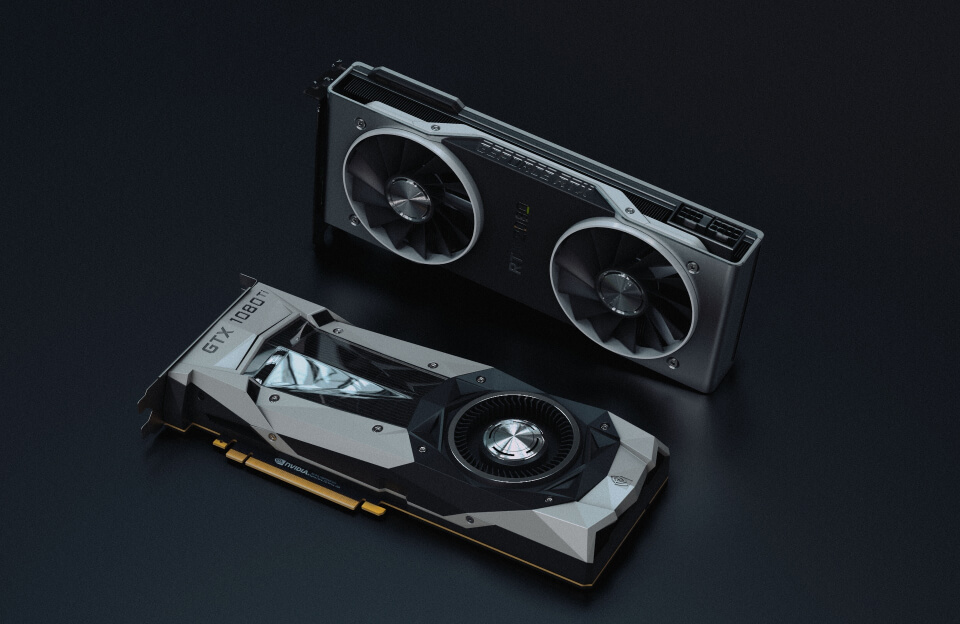
- GPU (Graphics Card) – The graphics processing unit delivers raw rendering power. Modern GPUs from NVIDIA’s RTX 30‑series or AMD’s Radeon RX 6000‑series can sustain 200+ fps at 1080p and 144 Hz.
- RAM (Memory) – Sufficient, fast DDR4 or DDR5 memory ensures quick data access for texture streaming and AI calculations.
- Storage – Switching from a mechanical hard drive to an NVMe solid‑state drive (SSD) dramatically cuts load times and level‑streaming stalls.
- Cooling & Power Supply – Reliable cooling keeps temperatures low for stable overclocking, while a high‑efficiency PSU protects components during intense sessions.
These upgrades are supported by reputable sources such as the Intel 12th‑Gen processor documentation and the NVIDIA RTX 30‑Series product page.
Step‑by‑Step Guide to Upgrade Gaming PC
Following a systematic approach reduces the risk of errors and ensures each component works together optimally.
- Assess Your Current Build – List your existing CPU, GPU, RAM, storage, and PSU. Use tools like CPU‑Z to gather precise specifications.
- Set a Budget and Performance Goal – Decide whether you aim for 144 fps at 1080p, 240 fps, or 4K performance. Allocate funds proportionally: 40 % GPU, 30 % CPU, 15 % RAM, 10 % storage, 5 % cooling/PSU.
- Upgrade the CPU – Choose a processor that offers higher boost clocks and more cores than your current model. Pair it with a compatible motherboard that supports PCIe 4.0 for future‑proofing.
- Install the New GPU – Remove the old card, install the new one, and secure it in a PCIe x16 slot. Connect power cables from the PSU and update drivers via the manufacturer’s website.
- Add or Replace RAM – Install matched kits (e.g., 16 GB (2×8 GB) DDR4‑3600) to benefit from dual‑channel bandwidth. Verify the BIOS recognizes the full capacity.
- Switch to an NVMe SSD – Mount the drive on an M.2 slot, clone your OS using software like Macrium Reflect, and set it as the primary boot device.
- Upgrade Cooling and Power – Install an aftermarket CPU cooler or AIO liquid cooler to sustain higher boost clocks. Ensure your PSU meets the wattage requirements (often 650 W+ for high‑end GPUs).
- Validate the Build – Run stress‑test utilities such as 3DMark and OCCT to confirm stability.
- Fine‑Tune Settings – Adjust in‑game graphics options for the best balance of visual clarity and FPS. Enable technologies like NVIDIA DLSS or AMD FidelityFX to boost performance without sacrificing image quality.
Completing these steps will give you a measurable gaming performance uplift, often translating to a 20‑40 % FPS increase in competitive titles.
Testing Performance After You Upgrade Gaming PC
Once the hardware is installed, objective testing is crucial to verify the competitive advantage you intended.
- Run benchmark suites (3DMark Time Spy, Fire Strike) and record baseline scores.
- Measure average FPS, 1‑% low, and 0.1‑% low values in popular esports games using built‑in console commands (e.g.,
net_graph 1in CS:GO). - Track input latency with tools like Leadtek GameBench to ensure it stays below 15 ms.
- Monitor temperatures during extended sessions to confirm cooling efficiency remains within safe limits (CPU < 85 °C, GPU < 80 °C).
Documenting these metrics not only validates your upgrade but also provides data you can use for future tuning. Many professional teams share their hardware configurations and benchmark results on platforms like Reddit, reinforcing this data‑driven approach.
Conclusion
Upgrading your gaming PC is a strategic investment that directly translates into competitive advantage—higher FPS, lower latency, and more consistent performance under pressure. By focusing on the CPU, GPU, RAM, storage, and cooling, and following the systematic step‑by‑step guide above, you can transform a stock rig into a tournament‑ready machine. Ready to dominate the leaderboards? Start your upgrade today and experience the edge that only a powerful, well‑tuned gaming PC can provide.
Frequently Asked Questions
Q1. Which component should I upgrade first for FPS gains?
Upgrading the GPU usually provides the biggest jump in frame rates for most games, especially at 1080p. If your current processor is older and bottlenecking, a CPU upgrade may be needed next. Pairing a stronger GPU with sufficient RAM ensures the system can handle higher textures and effects.
Q2. Is 16 GB of RAM enough for competitive gaming?
For most esports titles 16 GB is sufficient and offers a good balance of speed and capacity. However, using fast DDR4‑3200 or DDR5‑5600 can reduce loading stutter and improve texture streaming. If you also stream or run background applications, 32 GB may provide extra headroom.
Q3. How much does an NVMe SSD improve in‑game performance?
An NVMe SSD dramatically cuts loading times and eliminates texture pop‑in in open‑world games. While FPS gains are modest, lower latency in asset streaming can make gameplay feel smoother. It also speeds up OS boot and reduces background task impact during matches.
Q4. Do I need a new power supply when I upgrade to an RTX 3080?
The RTX 3080 recommends a minimum 750 W, 80+ Gold PSU for reliable operation under load. If your current PSU is lower wattage or older, replacing it prevents sudden shutdowns and protects components. Always check the GPU’s power connectors and the total system draw.
Q5. What cooling solution is best for overclocking my CPU?
High‑end air coolers like the Noctua NH-D15 or AIO liquid coolers such as the Corsair iCUE H115 provide excellent thermal performance. Liquid cooling can keep temperatures below 70 °C even at high boost clocks, allowing stable overclocks. Ensure good case airflow to complement the cooler.